The best colored pencils for coloring books, and how to fill big spaces without the scribbled look
Colored pencils are cheap, quiet and never bleed, but bold-and-easy pages with big open shapes are where they struggle. Here is which set to buy at each price, what wax and oil mean, and the techniques that turn a big pencil area smooth.
Updated October 28, 2026 · 15 sources

The short version
- Soft and rich: Prismacolor Premier 24, about $25 in October 2026. Great color and blending; breaks more than most.
- Mid price, many colors: Castle Arts 72 or Arteza Expert 72, about $40. Sarah Renae Clark rates both as Prismacolor alternatives.
- Firm and durable: Faber-Castell Polychromos (oil-based), 24 for about $39 on Amazon. Holds a point, no wax bloom.
- Big bold pages on a budget: Soucolor or KALOUR 72 at about $12, so your good pencils don't wear down on floors and skies.
- For smooth big areas: light layers in small circles, then burnish or brush on odorless mineral spirits (on cardstock).
- Pencils take about three times as long as markers on the same page: pick pages with more, smaller spaces.
Quick picks
Prices are Amazon US listings on October 29, 2026 unless noted, and move weekly. Per-pencil cost is our arithmetic. We have not tested these pencils ourselves; notes come from the reviewers and colorists named in each section.
| Set | Core | About | Per pencil | Good at | Watch out for |
|---|---|---|---|---|---|
| Prismacolor Premier 24 | Wax, very soft | $25 (48 for $49) | $1.02 to $1.04 | Rich color, easy blending, fast coverage | Breakage, off-center cores, wax bloom |
| Faber-Castell Polychromos 24 | Oil, firm | $39 ($74 list) | $1.64 | Fine points, many layers, durable | Price; translucent white |
| Castle Arts 72 | Wax, soft | $40 | $0.56 | Many colors, smooth | No single pencils to replace |
| Arteza Expert 72 | Wax, soft | $39 | $0.54 | Blending, lightfast ratings on each barrel | Fewer colorist reviews than Prismacolor |
| Castle Arts 48 Pastel | Wax | $35 to $38 | $0.73 to $0.79 | Soft cozy palettes | Pastels only |
| Soucolor 72 | Soft core | $12 | $0.17 | Big areas, trying it out | Harder, needs more layers |
| KALOUR 72 | Soft core | $12 | $0.17 | Same | Same |
Wax vs oil pencils
The binder decides how a pencil feels. Pigment is held together by wax, oil, or a mix. Most coloring pencils are wax-based; a few artist lines are oil-based.
| Wax-based (Prismacolor Premier, Arteza Expert, most budget sets) | Oil-based (Polychromos, Castle Arts Gold) | |
|---|---|---|
| Feel | Soft, creamy, covers quickly | Firmer, drier, more control |
| Point | Wears down fast | Sharpens to a fine point and keeps it |
| Layers | Fewer before the surface fills (Prismacolor still takes 8 or more) | Nearly unlimited with a light hand (Lisa Clough) |
| Wax bloom | Yes: a whitish haze on heavy layers | No |
| Breakage | Soft cores snap more | Rarely |
| On big bold areas | Faster coverage | Slower, smoother build-up |
The line is not strict: Sarah Renae Clark describes Castle Arts Gold as oil-based but with a soft, waxy feel. And you can mix them: artist Lisa Clough uses Polychromos for fine detail and Prismacolor for soft skin tones in the same drawing.
Prismacolor Premier
The best-known coloring pencil: the 24 set has 51,500 Amazon reviews and sells 5,000 or more a month. Reviewers agree on the strengths: rich color, easy blending, 8 or more layers before the paper fills. They also agree on the weakness. Lisa Clough, reviewing for Parka Blogs, describes cores that snap inside the wood, off-center leads and warped casings, and says some artists lose half a pencil sharpening it; she and The Virtual Instructor date the complaints to the move of production to Mexico.
- Sharpen gently. Clough found an electric sharpener broke far fewer than handheld ones. With a handheld, hold the pencil still and turn the sharpener, on the short-point setting.
- Expect wax bloom on heavily layered areas: a cloudy film that makes more layers and details harder. Odorless thinner reduced it in Clough's tests but didn't remove it.
On bold-and-easy pages, the softness is a plus: big areas cover faster than with any firm pencil. The 24 set is enough for blush, shading and small accents over markers; bigger sets run to 48 ($49) and 150 ($140).
Faber-Castell Polychromos
An oil-based artist pencil. Lisa Clough reports no breakage at all, a "super fine point" from both electric and cheap handheld sharpeners, and almost unlimited layering without bloom. Each pencil carries a lightfastness rating in stars (Blue Wool scale); she keeps nothing below two stars, which matters if you frame finished pages.
| Polychromos set | About, Oct 2026 | Per pencil |
|---|---|---|
| Tin of 12 | $20 | $1.67 |
| Tin of 24 | $39 on Amazon ($74 list on Faber-Castell's US store) | $1.64 |
| Tin of 36 | $67 | $1.86 |
| Tin of 60 | $100 | $1.67 |
Two caveats for coloring pages. The white is translucent: Clough says it barely showed over a colored background, so use a gel pen or a wax white for highlights. And firm pencils lay down less color per pass than soft wax ones, so big flat areas take more layers. Polychromos make most sense on detailed pages and small shapes; on a 40-space bold page, the extra cost buys little.
Castle Arts and Arteza: the mid-price picks
Sarah Renae Clark has reviewed about 35 mid-price pencil lines. Two that come up as Prismacolor alternatives:
- Arteza Expert (72 for about $39): one of her "favorite Prismacolor alternatives". Blends well, vibrant, passed her layering and durability tests, and prints a lightfastness rating on every barrel. Sold in 48, 72 and 120, and as single pencils.
- Castle Arts (72 for about $40; Gold Standard 72, oil-based, about $43 to $50): she calls Castle Arts Gold "one of the best budget Prismacolor alternatives" with "amazing blending". Buyers' recurring complaint is that Castle Arts doesn't sell single pencils. The 48 Pastel set ($35 to $38) suits soft cozy palettes.
Also in her list: Deli, which she finds similar to Polychromos and one of the best mid-price sets for beginners, and Faber-Castell Black Edition, which blends well and is vibrant but didn't sharpen well in a crank sharpener. Colorist soph coloring uses Black Edition pencils alongside her Ohuhu markers.
Budget sets: Soucolor and KALOUR
Soucolor 72 ($11.98, 25,000 reviews) and KALOUR 72 ($11.99) are the best-selling adult coloring pencils on Amazon by a wide margin: 10,000 and 20,000 or more sold a month. Shuttle Art 80 ($9.99) is close behind. We found no independent side-by-side test of these sets; buyers rate them 4.7.
What you give up compared with Prismacolor is creaminess: cheaper cores are harder, so you need more layers to cover the paper and they don't burnish as smoothly. What you gain is freedom on big areas. One r/Coloring user keeps cheap pencils for bold-and-easy pages so "you don't wear down your good colored pencils" on floors, walls and skies. A $12 set and a $25 Prismacolor 24 for the finishing touches is a sensible pair.
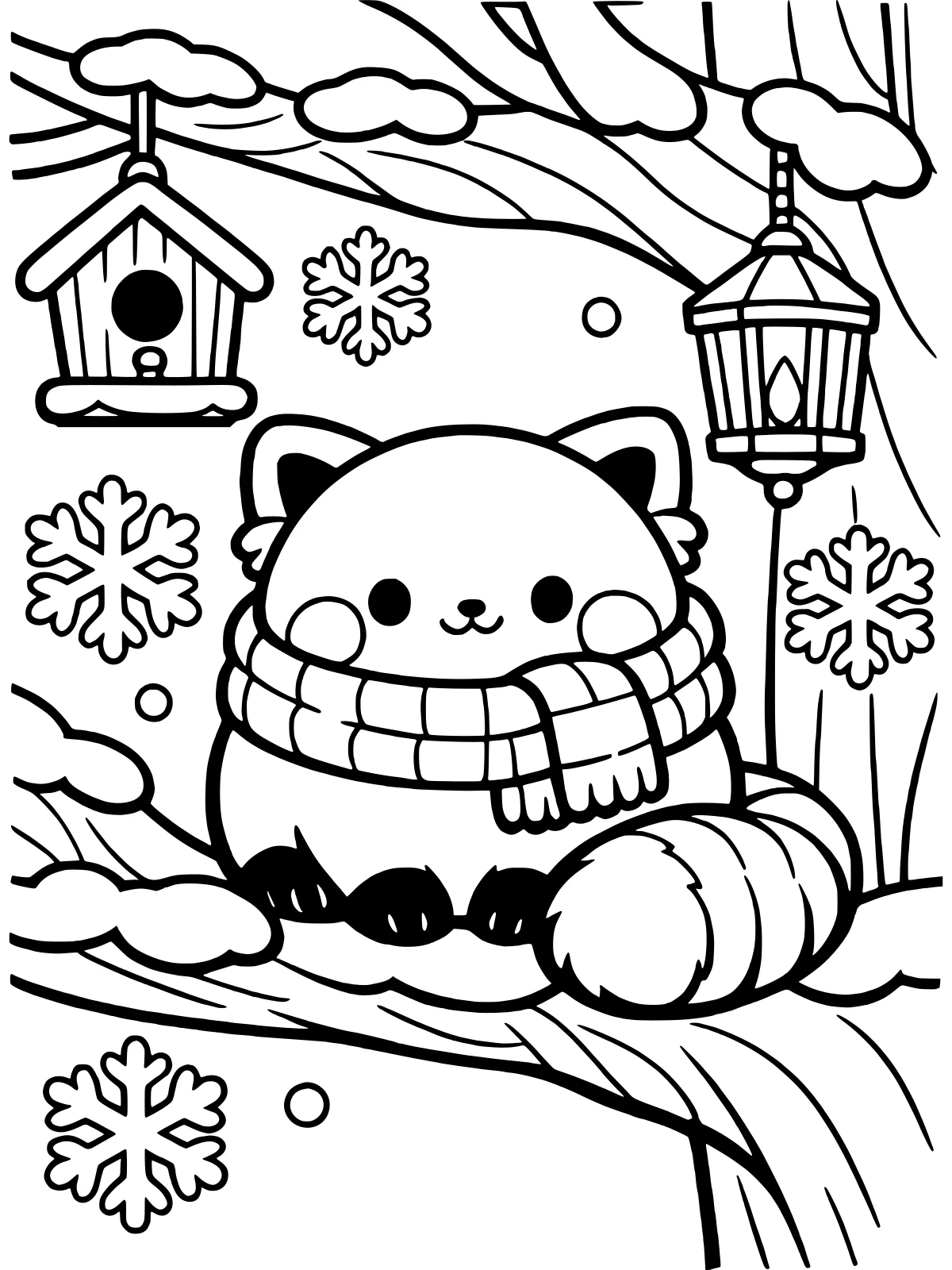
The blank page: 101 spaces

Colored in a warm, short palette
Pencils on bold-and-easy pages
Bold-and-easy pages were designed with markers in mind: thick lines hide ink spread, and big shapes fill in a few brush strokes. In pencil, those same big shapes are slow. Mira Byler colored one cozy page with markers and one with pencils; the pencil page took about three times as long. On r/Coloring, pencil users complain that "thick lines and lots of spaces make it a chore" and that "the main part of this picture is floor".
Ways colorists handle it:
- Choose pages with more, smaller spaces. A page with 90 to 130 spaces has no huge empty area. Our Medium pages fit; so do busy cozy scenes.
- Fill big areas in light layers. Small overlapping circles with light pressure, two or three times, rather than one hard pass. Hard pressure flattens the paper and leaves streaks you can't layer over.
- Use a cheap pencil for the big area and your good pencils for faces, blush and shading.
- Smooth it at the end by burnishing or with a solvent (next sections).
- Or lay a marker base on big areas and use pencil on top for texture and shading.
Our tip
Layering and burnishing
Layering is several light passes with the paper tooth still visible. Burnishing is the last step: firm pressure with a white pencil, a light color or a colorless blender pencil until no tooth shows. Burnished color looks smooth and slightly shiny, and won't take much more pencil on top.
Gary Greene's order, demonstrated with Prismacolor on Artists Network:
- Light colors first, with minimal pressure.
- Build the darker tones in more light layers.
- Burnish with white or a light color, pressing firmly.
- Re-layer color where needed, then finish with a colorless blender pencil.
Prismacolor's own advice for its colorless blender: lay all your color first, then blend, because blending fills the tooth and later layers slide off. Keep the blender sharp and the pressure light to avoid a waxy buildup.
Solvent blending
A solvent melts pencil layers into a smooth, paint-like finish, which is the fastest way to remove speckles from a big area. Thaneeya McArdle recommends odorless mineral spirits such as Gamblin Gamsol:
- Pour a very small amount into a cup; a little goes a long way.
- Brush it over the colored area with a flat brush for big shapes, a small round brush or a cotton swab for details.
- Let it dry, then add more pencil on top if you like, and blend again.
- Work in a ventilated room, even with "odorless" spirits.
It works on wax and oil pencils, and reduced (but didn't remove) wax bloom on Prismacolor in Lisa Clough's review.
Test on a spare print, not your book
Paper for colored pencils
Pencils don't bleed, so paper matters less than with markers. What changes is how many layers it takes.
| Paper | Weight | With pencils | Source |
|---|---|---|---|
| 20 lb copy paper | 75 gsm | Fine; no bleed. Thin for solvent | r/Coloring, Coloring Dojo |
| Printed pages for pencils | 100 to 120 gsm | Coco Wyo's recommendation for its PDFs | Coco Wyo FAQ |
| 65 lb cardstock | 176 gsm | Firm; the safer choice for solvent and for mixing with markers | Our default for markers |
| Drawing paper "with a little bit of grain" | 190 gsm | Grips pencil well | Paperesse |
| 100 lb cover cardstock | about 270 gsm | "Too smooth for much pencil" | Baylee Jae |
Our pages are free PDFs in US Letter and A4; print them on whatever you have. For pencil-only pages, copy paper is fine. For pages where you mix markers and pencils, use 65 lb cardstock (176 gsm). Paper weights are explained in the printing guide.
Pencils with markers
On finished cozy pages, the most common mix is an alcohol marker base, colored pencil on top for shading, texture and blush, and a white gel pen last. Thaneeya McArdle (Art is Fun) uses a white pencil to soften marker blends and the edges of highlights.
- Blush: a pink pencil in small circles over dry marker fades out at the edges more softly than ink.
- Tiny spaces: Mira Byler switched to pencil for small flower centers after the marker spread there.
- Order: marker first, pencil after. Papercrafters warn that going back over wax pencil with a marker can clog the nib (a single source, but cheap to avoid).
Mira BylerFuzzy Hygge, markers vs pencils, 203k views
Our tip: If a page is mostly big shapes, use markers for those and pencils for the small, soft parts.
For the marker side, see the best markers for coloring books.
Troubleshooting
| Problem | Cause | Fix |
|---|---|---|
| White speckles in a big area | Color only on the peaks of the paper tooth | More light layers, then burnish or brush on a solvent |
| Scribbled, streaky look | Long strokes with hard pressure | Small overlapping circles, light pressure, several layers |
| Color won't go on any more | The tooth is full (burnished or many wax layers) | Stop there; add details with gel pen or a marker on cardstock |
| Cloudy, whitish film | Wax bloom from heavy wax layers | Odorless mineral spirits reduce it; oil pencils don't bloom |
| Leads keep breaking | Soft wax cores, dropped pencils, off-center leads | Electric sharpener; turn the sharpener, not the pencil |
| Page takes forever | Big open shapes | Pages with more spaces, a cheap pencil for big areas, or a marker base |
| Colors look pale | Hard budget cores, one layer | Layer the same color 2 or 3 times; add a darker tone on the shadow side |
| Highlights don't show | Translucent white pencil | White gel pen on top, last |
Pages for pencils
Pick pages with medium-sized spaces and print them on whatever paper you have. Our coloring pages are free PDFs in US Letter and A4 with 1/2 in margins, and you can reprint a page to try a palette before the real one. For a full kit with paper and a white pen, see coloring supplies.

Red Panda in a Cozy Scarf
101 spaces · Medium

Cat in a Cozy Sweater
96 spaces · Medium

Record Player with Plants and Records
104 spaces · Medium

Cat Sleeping in a Laundry Basket
99 spaces · Medium

Ready to color?
216 free cozy coloring pages: PDF in US Letter or A4, or color online. No sign-up.
Questions people ask
What are the best colored pencils for adult coloring books?
Prismacolor Premier (24 for about $25 in October 2026) if you want soft, rich color that blends easily; Castle Arts or Arteza Expert 72 (about $40) for more colors at a mid price; Faber-Castell Polychromos (24 for about $39 on Amazon) if you want a firm, oil-based pencil that holds a point and doesn't break. For big bold-and-easy pages, a $12 Soucolor or KALOUR 72 does the job.
Prismacolor or Polychromos?
Prismacolor Premier is wax-based: very soft, quick to cover and blend, but brittle and prone to wax bloom. Polychromos is oil-based: firmer, holds a sharp point, layers almost without limit and rarely breaks, but costs more. Many artists use both. On bold-and-easy pages with big shapes, Prismacolor's softness covers faster.
Are cheap colored pencils good enough for coloring books?
For bold-and-easy pages, yes. Soucolor and KALOUR 72 sets (about $12) are the best-selling pencils on Amazon for adult coloring, rated 4.7 from tens of thousands of buyers. They are harder and less creamy than artist pencils, so they take more layers. One r/Coloring user keeps cheap pencils for big bold pages so the good ones don't wear down on floors and skies.
What is the difference between wax-based and oil-based colored pencils?
The binder that holds the pigment. Wax pencils (Prismacolor Premier, Arteza Expert, most budget sets) are soft and creamy and can leave a whitish wax bloom when layered heavily. Oil pencils (Polychromos, Castle Arts Gold) are firmer, keep a point longer and don't bloom. Both blend with a colorless blender or odorless mineral spirits.
How do you get smooth color with colored pencils?
Several light layers in small circles, light colors first, then burnish: press firmly with a white, a light color or a colorless blender pencil until no paper shows through. Or brush a small amount of odorless mineral spirits over the layers on cardstock. Lay all your colors before blending, because a burnished surface resists more color.
What paper is best for colored pencils?
Copy paper works fine and doesn't bleed. Coco Wyo suggests 100 to 120 gsm for pencils when you print its pages. A little tooth helps colors grip: Baylee Jae finds 100 lb cover cardstock too smooth for much pencil. Try solvent blending on a cardstock print first.
How this guide was made
Written by Cozy Coloring from colorists' own videos and posts, brand specifications and independent reviews, listed below. We have not run lab tests: where sources disagree, we say so.
- Parka Blogs (Lisa Clough): Review of Prismacolor Premier colored pencils (2015)
- Parka Blogs (Lisa Clough): Review of Faber-Castell Polychromos (2015)
- Sarah Renae Clark: All mid-price colored pencils (updated 2024)
- The Virtual Instructor: Prismacolor Premier quality
- Faber-Castell: Polychromos tin of 24
- Prismacolor
- Castle Arts
- Arteza
- Thaneeya McArdle: Using solvents to blend colored pencils
- Thaneeya McArdle: How to combine alcohol markers and colored pencils
- Artists Network: Burnishing with colored pencil (Gary Greene)
- Wikipedia: Colored pencil (layering and burnishing)
- Mira Byler: markers vs colored pencils on a cozy page (YouTube)
- Baylee Jae: Paper Types For Markers (YouTube)
- Coco Wyo: FAQ (paper weights for printing)